Wednesday, March 23, 2011

Clever bird


After two great school visits in Saratoga Springs, N.Y., last week (thank you, Caroline Street and St. Clement’s!) I was in Vermont for the weekend with friends, and their dogs. At the end of a long day on Friday, at about 1:00 in the A.M., one of the dogs was escorted out back to take care of things and while doing that he got involved with a skunk who was in the meantime doing some work in the compost pile. Man. I’ve smelled skunk in the distance, but never up close. It’s an entirely different experience.

As it happens, the April issue of Click magazine will be all about animal defense mechanisms. Timely! Beatrice Black Bear investigates how killdeers will fake an injury to lead a predator away from a nest. I was happy with how these two characters came out, each pretty sure he has the drop on the other. Only one of them is right. For the text by John Grandits and the rest of the story, you can look for Click at your local library.

There’s more about Click here and more about John here.

Friday, March 4, 2011

Events I am missing (NY, NJ) and attending (TX!)

I’m sorry to be missing a couple of events with the Book Maker's Dozen this weekend that I nevertheless would like to let you know about: an opening and show (and sale) of original art at powerHouse Books in Brooklyn tonight, Friday, March 4 (details here), and a field trip to Sparkhouse Studios in South Orange, N.J. on Sunday, March 6 (details here).

On the bright side, I’ll be at an arts festival in Killeen, Texas tomorrow, Saturday the 5th. The festival runs from 10 A.M. to 5 P.M. at the Killeen Civic & Conference Center. Details are here. I’ll be signing books and spending the day with a great group of authors and illustrators, including (but not limited to!) Kathi Appelt, Chris Barton, David Davis, Shirley Duke Smith, Clare Dunkle, P.J. Hoover, Keith Graves, Mark Mitchell, Jan Peck, Don Tate, Jessica Lee Anderson, Terry Widener, C.G. Young, Jennifer Ziegler, and others. Read all about all of us, here. I'm looking forward to the day. If you’re in striking range of Central Texas, I hope you’ll come by and see us!

Tuesday, March 1, 2011

Portrait of the Artist


The March issue of Click magazine (where I have a regular gig illustrating the comic Beatrice Black Bear, written by John Grandits) is about art — looking at it, and making it. I have a piece in the issue on the process of making picture books. The image here accompanies the text, “Sometimes the pictures don’t work out well, and then I try again.” You see in this drawing that I do not duck hard truths just because I am writing for a young audience.
There’s more about Click here and more about John here.

Friday, February 25, 2011

Belated blogging: an exhibit at the Brooklyn Public Library


A few weeks ago I alluded here to installing an exhibit, and I haven’t written anything about it since. Am I really that bad at using blogs and social media for self-promotion? Or does my lackadaisical, half-witted approach make the posts seem all that more “genuine”? Don’t answer that. Here’s all about the show:


I’m grateful to the Brooklyn Public Library for hosting an exhibit of my work in the Youth Wing at the Central Library on Grand Army Plaza. The exhibit opened on February 8 and runs to April 9. In the show are about forty original drawings and watercolor paintings from The Racecar Alphabet; Lightship; Moonshot; The Hinky-Pink, by Megan McDonald; Ballet for Martha, by Jan Greenberg and Sandra Jordan; The True Gift, by Patricia MacLachlan; and Avi’s Poppy Stories novels. The exhibit operates under the title “Drivers, Dancers, Mice & Moon: Children’s Book Art by Brian Floca.” I think I had the old rhyme “tinker, tailor, soldier, sailor,” in my head while trying to come up with a name for the show. Or was I thinking of John le Carré?


Regardless, I am, again, grateful to the BPL, and especially to Manager of Exhibitions Barbara Wing, for the show. It was an honor to have work in the “Drawn in Brooklyn” exhibit with many talented friends a few months earlier, and it’s an honor to be back in the Youth Wing now. And, it was a surprisingly pleasant thing for me to blow the dust off the files at home and pull out the original art for this show. I’m always impressed by how closely production departments and printers get to the originals — but there’s nothing quite like the actual ink and pencil and paper. Pulling the work out of the files was like excavating old friends. I hope you’ll have a chance to see them!


More on the exhibit is at the BPL web site, here.

Saturday, February 5, 2011

Monday, January 31, 2011

These boots are made for...


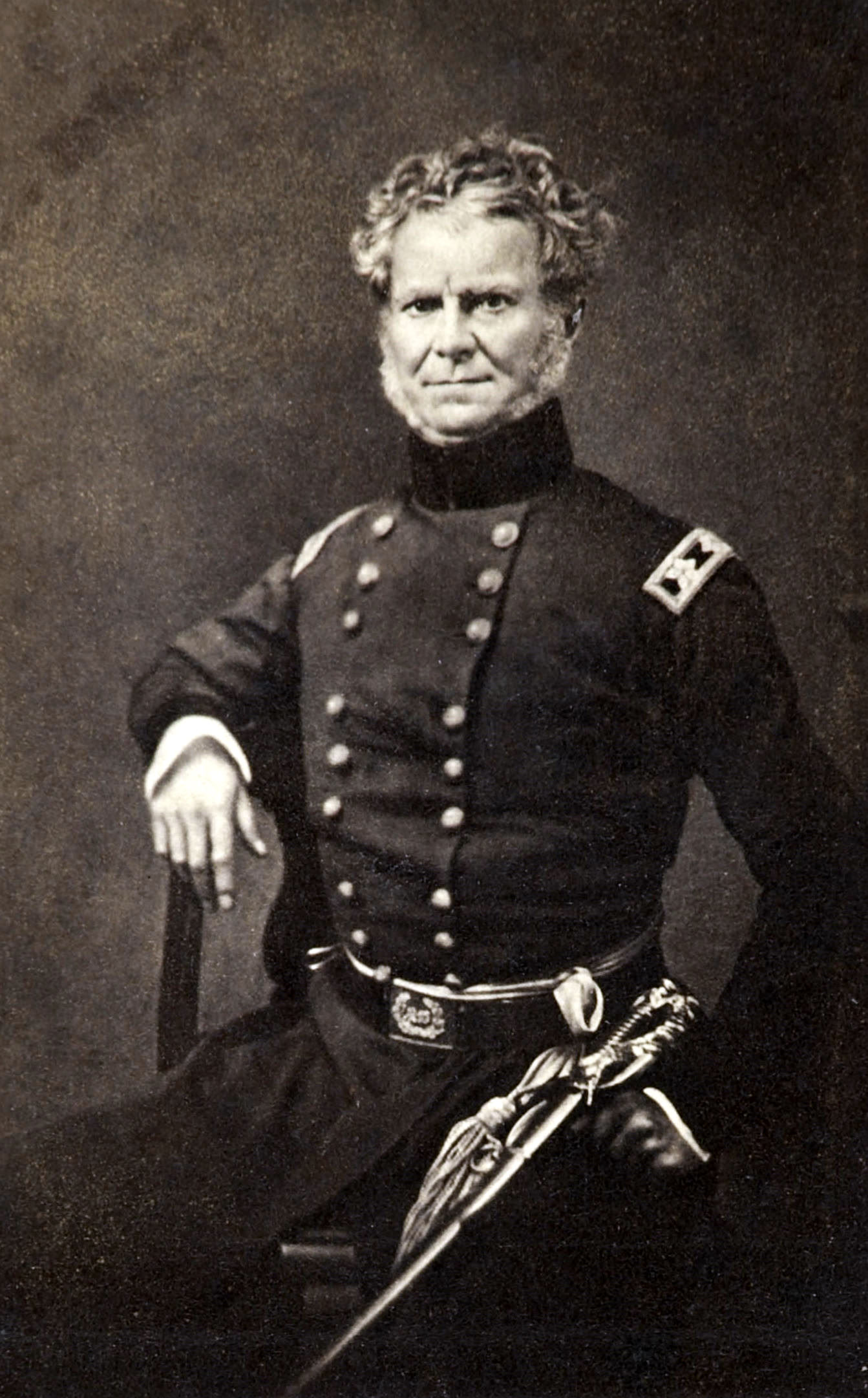
The word “boots” is context-specific. I was reminded of this last week when I left the howling winds and snowdrifts of Brooklyn for a quick trip to the Cowtown Book Festival in Fort Worth. I had a great time meeting the librarians and teachers of north Texas and visiting with fellow authors and illustrators, friends old and new, including Avi, Jan Peck, Chris Barton, Don Tate, Jeanette Larson, Mark Mitchell, Claire Dunkle, Jennifer Zeigler, P.J. Hoover, Jessica Lee Anderson, and K.A. Holt — a great group. Avi brought some Denver representation to the scene, and Clare some San Antonio, but clearly it was Austin that was in the house. Thank you to Pat Anderson of Texas Overlooked Books, organizer and author wrangler!

Extra credit: What is the New York/Fort Worth connection?
A: The mortal remains of Major General William Jenkins Worth himself lie in repose beneath an obelisk at the intersection of Broadway, 5th Avenue, and 23rd Street in Manhattan, just west of Madison Square Park. Click here to gaze upon the fierce visage that the Major General wore in life.

Countdown: Apollo 14


Today, January 31, 2011, marks the 40th anniversary of the launch of Apollo 14, flown by astronauts Alan Shepard, Edgar Mitchell, and Stuart Roosa.


There’s no Apollo astronaut without an extraordinary story behind how he got to the Moon, but Shepard’s may be the one to beat. Shepard was a Naval Academy graduate, World War II veteran, graduate of the United States Navy Test Pilot School, and test pilot. When NASA invited 110 of the country’s best pilots to apply for astronaut training in 1959, Shepard was one of seven chosen.


On May 5, 1961, Shepard was strapped into the Mercury capsule Freedom 7, atop a Redstone rocket, prepared to become the first American in space. Space then felt central to the nation’s future; a country’s exploration of this new frontier served as a sort of shorthand for its ambition, its technical capability, its willingness and its ability to lead in the world. On this new field, the Soviet Union seemingly could do no wrong; in 1957 the Soviets had vaulted the first artificial satellite into space. They had followed up with other successes, including putting the first man into orbit. For over three years the United States had stumbled in second place.


On the day of Shepard’s flight, it seemed the stumbling might continue. Shepard was to be sent only on a fifteen-minute suborbital arc, but problems with the weather and the rocket led to delay after delay in the launch. The hours ticked by. Eventually there came one of my favorite bits of dialogue from the entire space program — Shepard, growing impatient, radioed down to the launch crew, “I’m cooler than you are. Why don’t you fix your little problem and light this candle?” I admire that, even if I cannot guarantee that I would use the same words if I myself was perched atop a flying bomb that might or might not have technical problems. (But I guess you never know until it happens to you.)


Shepard’s flight was a triumph, but before he had a chance to fly again, Shepard was stricken with Ménière's syndrome, a condition of the inner ear that results in nausea, vertigo, and disorientation. He remained actively involved in the Apollo program, serving as Chief of the Astronaut Office, but Shepard, as ambitious and competitive as anyone in the program (and that’s saying something), could not fly.


This was Shepard’s frustration for the next five years. Early in 1969, he took his last chance at regaining flight status, checking into a Los Angeles hospital under an assumed name for an experimental surgical treatment — which was a success. On May 7, 1969, his flight status was restored, and that’s how Alan Shepard came to be eligible for, and received, command of Apollo 14.


The mission of Apollo 14 was inherited from the near disaster of Apollo 13 — an exploration of the Moon’s Fra Mauro range, a landscape more interesting and more challenging than the level plains on which Apollo 11 and 12 had landed.


Some of the smaller distinguishing aspects of Apollo 14: The mission saw the addition of a red stripe to the commander’s uniform, to help differentiate the commander and lunar module pilot once they were on the surface. Ed Mitchell attempted ESP contact with Earth on the way to the Moon, and Shepard famously sliced and then hit a golf ball while on the surface. (How far did he hit it? “Miles and miles and miles!”)


The mission contained just enough hiccups to remind one of how incredible and potentially dangerous it was to fly to the Moon, and yet the astronauts did enough on the surface to remind one of how much could be accomplished there, too. The amount of time astronauts spent on the Moon was growing mission by mission, as was the amount and quality of the science they were performing. Ironically, even as individual missions were expanding and becoming more ambitious, the program as a whole was contracting. Two of the projected Apollo missions had been cut the previous summer. The end of Apollo was coming into sight — but it wasn't there yet. Coming in July: a drive on the Moon.


Sources: A Man on the Moon: The Voyages of the Apollo Astronauts, by Andrew Chaikin; http://history.nasa.gov/40thmerc7/shepard.htm; http://www.nasa.gov/mission_pages/apollo/missions/apollo14.html.


And a reminder! This story—and the stories of all the Apollo missions—are told for younger readers in the excellent Mission Control, This is Apollo, by Andrew Chaikin, with paintings by Apollo 12 astronaut Alan Bean.